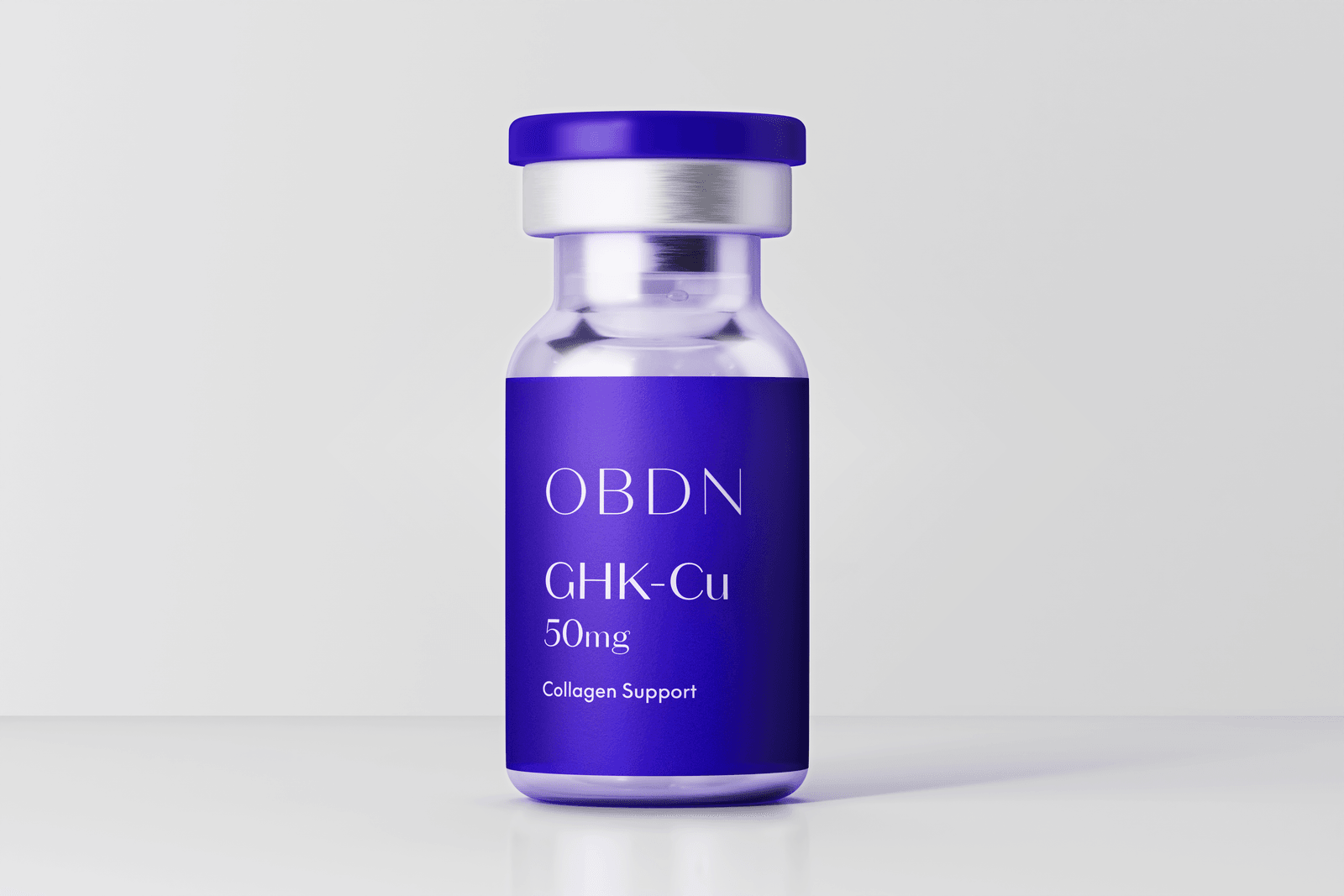
Coming SoonA copper-binding tripeptide studied for broad gene-regulatory effects — influencing over 4,000 human genes in transcriptomic analyses, with patterns shifting toward tissue maintenance.
The copper serves as a cofactor for lysyl oxidase, the enzyme that cross-links collagen and determines mechanical strength of newly formed matrix.
Circulating levels fall by more than half between age 20 and 60.
Extensive preclinical gene expression and wound healing data; human evidence limited to cosmetic dermatology studies
This content summarizes published research for educational purposes. It is not medical advice.
Research summary based on 9 peer-reviewed sources•Last updated: February 10, 2026•View references ↓
A copper-delivery complex that shifts cellular programs from defense-oriented states toward tissue maintenance. Microarray studies show GHK-Cu influencing over 4,000 human genes — not a single-target molecule but a broad regulator of tissue remodeling.3
Plasma levels drop from ~200 μg/mL at age 20 to ~80 μg/mL by age 60 — a 60% reduction that correlates with slower wound healing and reduced tissue repair capacity. This decline may represent a fundamental shift in tissue maintenance capacity.2
In dermal fibroblast cultures, GHK-Cu stimulated synthesis of collagen types I and III, decorin, and glycosaminoglycans. Quantitative assays measured increased hydroxyproline and procollagen peptide levels.12
In rodent full-thickness wound and burn models, GHK-Cu accelerated wound contraction, enhanced angiogenesis, and increased microvessel density in healing tissue.12
In macrophage cultures, GHK-Cu reduced secretion of IL-6 and TNF-α. The peptide also influenced superoxide dismutase and ferritin heavy chain expression — suggesting coordinated regulation of inflammatory signaling and oxidative stress.3
GHK-Cu's gene regulatory effects extend beyond skin. In COPD lung tissue, microarray studies show similar patterns — hundreds of genes involved in remodeling, inflammation, and matrix organization responding to the peptide. A Broad Institute Connectivity Map study demonstrated that GHK reversed the gene-expression signature of emphysematous destruction.347
GHK-Cu regulates expression of metalloproteinases and their inhibitors in fibroblasts, providing mechanistic evidence for ECM remodeling capacity.8
Clinical studies have evaluated topical GHK-Cu on skin architecture. Histological analyses documented changes in collagen organization and dermal density. Quantitative measures of wrinkle depth and skin elasticity showed improvements versus placebo.
Laser Resurfacing (2006): Controlled study on CO₂ laser-resurfaced skin showed mixed objective outcomes but higher patient satisfaction.
Wrinkle Reduction (2016): 8-week RCT with GHK-Cu in nano-lipid carrier demonstrated 55.8% wrinkle volume reduction versus control; 31.6% versus Matrixyl 3000.56
These cosmetic trials provide the primary human data supporting GHK-Cu's effects on tissue quality.
GHK-Cu has well-characterized mechanisms and robust preclinical evidence. Human data are largely confined to topical cosmetic applications.
The age-related decline in circulating GHK-Cu has been documented. Whether supplementation reverses age-associated tissue changes in humans has not been established through rigorous clinical trials.
For laboratory research use only.
| Amino Acid Sequence | Gly-His-Lys |
|---|---|
| Single-Letter Code | GHK |
| Molecular Formula | C14H22CuN6O4 |
| Molecular Weight | 401.93 g/mol |
| Amino Acid Count | 3 |
| CAS Number | 49557-75-7 |
| PubChem CID | 73587 |
| Origin | Naturally occurring copper-binding tripeptide (glycyl-L-histidyl-L-lysine) first isolated from human plasma, forming a high-affinity complex with copper(II) ions that modulates extracellular matrix remodeling and gene expression |
| Synonyms | Copper Peptide, GHK-Cu, Glycyl-L-histidyl-L-lysine:copper(II), Lamin, Prezatide copper acetate |